
Sex Offender Checks in Manatee County
The Florida Department of Law Enforcement operates the Florida Sexual Offender and Predator Search. It is the primary public channel for Manatee County names, addresses, map results, and registration status. The portal updates as partner reports arrive, but a recent move may reach the screen after the underlying report. Search aliases and partial names, then narrow by geography.
The official FDLE registry home provides the quick name and neighborhood starting points.
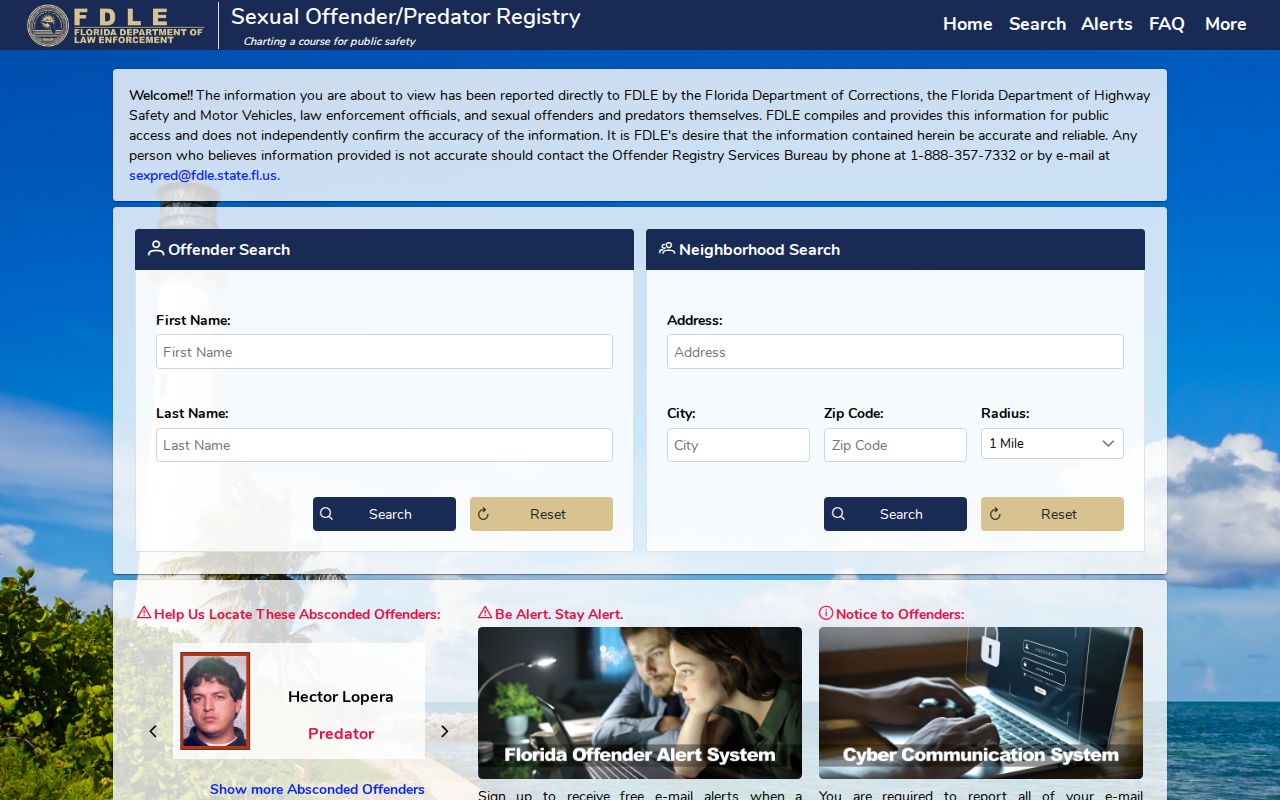
Name results work best when paired with date of birth, aliases, photo, physical marks, and address history. A map marker or matching name alone is not positive identification.
Manatee Registry Search Modes
FDLE offers several ways to answer different safety questions. Quick name search uses first and last name. Neighborhood search accepts an address, city, ZIP code, and radius. Expanded search can use first name, last name, city, county, or ZIP, with at least one field required and partial names accepted. Type filters separate sexual offenders, sexual predators, or both.
Broader navigation also includes university or campus searches and Internet-identifier searches. Those are specialized registry tools, not general criminal-history searches. Public data downloads support official aggregation, while PDF print selection is limited to 25 records. Map and list symbols distinguish offenders, predators, and transient registrants, so read the legend before drawing a conclusion from a marker.
Expanded results can also be narrowed by state status and display choice. In-State, Out-of-State, or Both helps distinguish a Florida location from a record retained for another reason. Status choices include absconded, civil commitment, confinement, deceased, deported, released subject to registration, and supervision by FDC, DJJ, or U.S. Probation. Use filters to reduce a result set, then read the full status text.
How to Search the Florida Sexual Offender and Predator Search
Use a name when checking a known person. Use neighborhood search for a saved location, and expanded search to combine Manatee County with a name, city, or ZIP. Review all returned candidates. The portal warns that FDLE does not independently guarantee every partner-reported detail and does not assign a risk score through the listing.
- Open the FDLE registry and choose quick name, neighborhood, or expanded search.
- Enter a name or geographic field, then choose offender, predator, or both when needed.
- Compare aliases, photo, physical traits, addresses, and status across plausible results.
- Open the full profile, review its report date, and use fingerprints when positive identity is required.
| Search | Fields or controls | Required | Use |
|---|---|---|---|
| Quick name | First Name, Last Name, Search, Reset | Name input | Known person |
| Neighborhood | Address, City, ZIP, Radius | Location inputs | Area and proximity search |
| Expanded | First, Last, City, County, ZIP | At least one | Partial name or Manatee filter |
| Type | Offenders, Predators, Both | Choice | Designation filter |
| Status | Absconded, confined, released, supervised, and other labels | Optional | Narrow current registration status |
Manatee Offender Address Alerts
The Florida Offender Alert System can send email when a registered person moves near a saved location or when a tracked registrant’s location changes. An alert is a notice to review the current official profile. It is not a finding that a new offense occurred. Address data may change quickly, so open the live listing rather than relying only on the message.
The FDLE registry FAQ explains public searches, alerts, classifications, and registration duties.
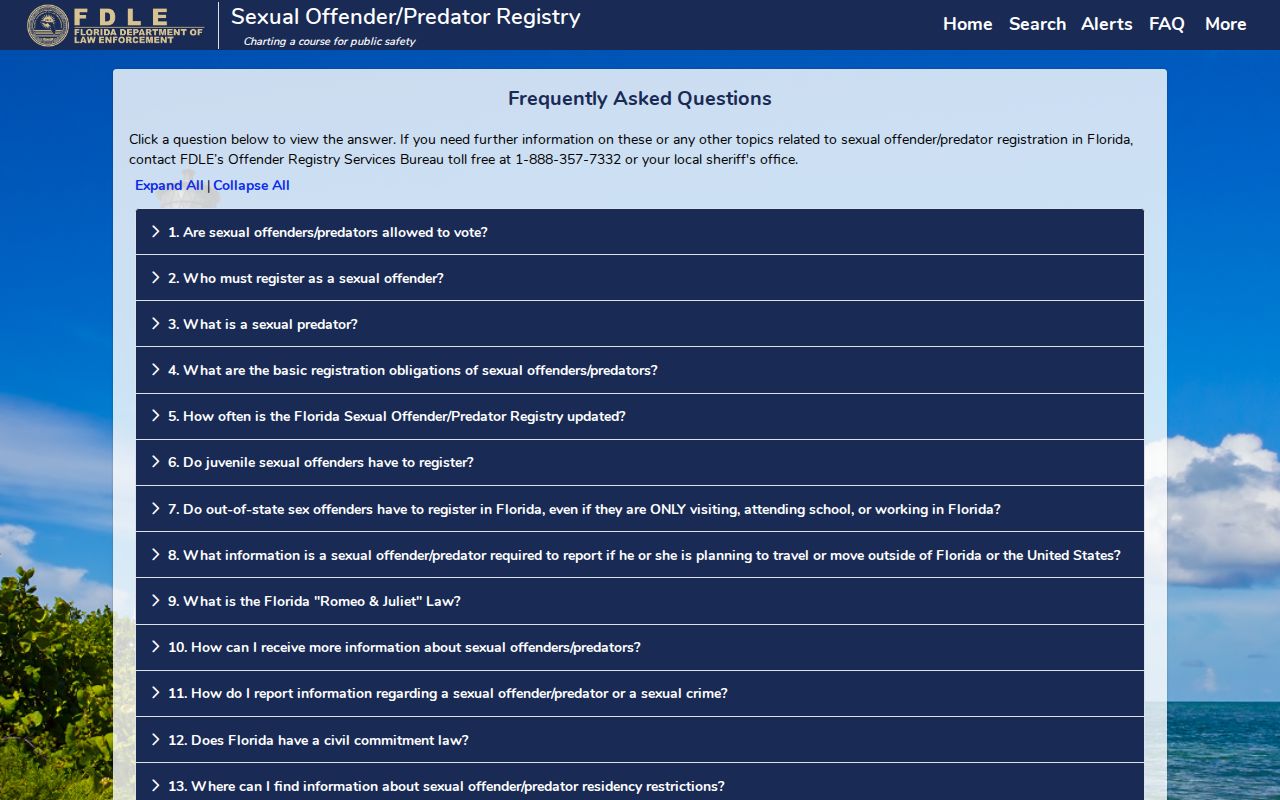
Neighborhood alerts support community awareness without requiring repeated manual searches. Save a precise location and radius, then verify any alert against the full FDLE profile.
A tracked-person alert and a neighborhood alert answer different questions. The first follows changes tied to one selected registrant. The second watches movement near a saved place. Neither promises real-time notice. Partner agencies report changes to FDLE, and display can follow the event. Review the report date and contact law enforcement when a current address raises a factual compliance concern.
Inside a Registry Profile
An FDLE flyer combines identifying, location, offense, and registration facts. It may show permanent, temporary, and transient addresses with a map. The offense section identifies the statute, jurisdiction, conviction, and an authorized adult or minor victim-age category. It never identifies the victim by name. Vehicle and higher-education registration fields may also appear.
| Name & Aliases | Primary name and reported aliases used to compare candidates |
|---|---|
| Photo & Physical Description | Photo, age, sex, race, height, weight, hair, eyes, scars, tattoos, and marks |
| Registered Address | Permanent, temporary, or transient locations and map information |
| Offense & Statute | Offense, statute, jurisdiction, conviction data, and lawful victim-age category |
| Designation | Florida sexual offender or court-designated sexual predator, not a public risk tier |
| Registration Status | Absconded, confined, released subject to registration, supervised, or other listed status |
Detailed vehicle, address, and mark data helps distinguish people with similar names. It must not be treated as permission for confrontation. Fingerprint comparison remains the method for positive identity.
Florida Registry Status Terms
“Absconded” means the person is no longer at the last reported address. It does not mean a new conviction. “Civil Commitment” denotes confinement under the Jimmy Ryce process. “Confinement” can refer to Florida, federal, local, juvenile, or immigration custody. “Released Subject to Registration” means the person is no longer confined or supervised but still must register.
Supervised labels identify the responsible system, such as FDC, DJJ, or U.S. Probation. Deceased and deported are separate status choices. Read the designation and status together. An offender designation does not state current custody, while a custody label does not describe a new offense or risk level.
Florida Registration Levels and Requirements
Florida does not publish a Tier I, II, and III risk system. It uses “sexual offender” and court-designated “sexual predator.” Registration generally lasts for life, subject to narrow statutory petition routes. Initial sheriff reporting is generally required within 48 hours of Florida residence, release, or another qualifying event. Registration includes identity, fingerprints, photo, address, contact and Internet data, vehicles, conviction details, and specified documents.
| Florida category | General duration | Re-registration |
|---|---|---|
| Sexual offender | Generally lifetime, with narrow petition routes | Generally semiannual; specified categories may report more often |
| Sexual predator | Generally lifetime; relief depends in part on designation date | Quarterly |
| Specified offender categories | Generally lifetime unless statutory relief applies | Quarterly where Florida law requires |
A narrow offender petition may arise after at least 25 years lawfully released from confinement, sanction, and supervision with no later qualifying arrest, subject to serious-offense exclusions. That is not a general 25-year tier and does not apply automatically.
Predators and specified categories report quarterly, while other offenders generally report twice each year. A registrant must also report qualifying changes rather than wait for the next routine visit. Florida’s public labels describe a legal designation and current registration state. They should never be rewritten as low, medium, or high risk because the FDLE portal does not publish that type of score.
Reporting Manatee Registry Noncompliance
Suspected noncompliance can be reported to the local sheriff or police department, or to FDLE at 1-888-357-7332. The exact Manatee registration counter was not verified in official sources, so call MCSO to confirm the current location and appointment process rather than assuming the general Records office handles registration.
The City of Palmetto official page is a local government contact point, not a replacement for FDLE’s statewide registry.
For urgent danger, use emergency services. For a report about a possible registration violation, provide the observed facts without confronting or harassing anyone.
NSOPW Beyond Manatee County
The U.S. Department of Justice National Sex Offender Public Website adds cross-state coverage. It is useful when a person or location may connect to another state, territory, the District of Columbia, or participating tribal jurisdiction. NSOPW gathers searches across participating public registries; it does not turn the result into a national criminal-history report.
FDLE remains the authoritative Florida source for a Manatee County profile and state-specific status. The Manatee Clerk may supply the county-of-conviction case, while an arresting agency holds its report. Those records can add context, but the registry flyer never replaces a full criminal history or the originating court file.
Cross-state coverage matters when an alias, prior address, school, or work location points beyond Florida. Search NSOPW, then open the participating jurisdiction’s source record for its current details and definitions. Each jurisdiction uses its own registration law. A label from another state should not be translated into Florida’s offender or predator designation without support from the official record.
The Holmes Beach shared City Hall and police contact page illustrates another local contact route rather than a registry search.
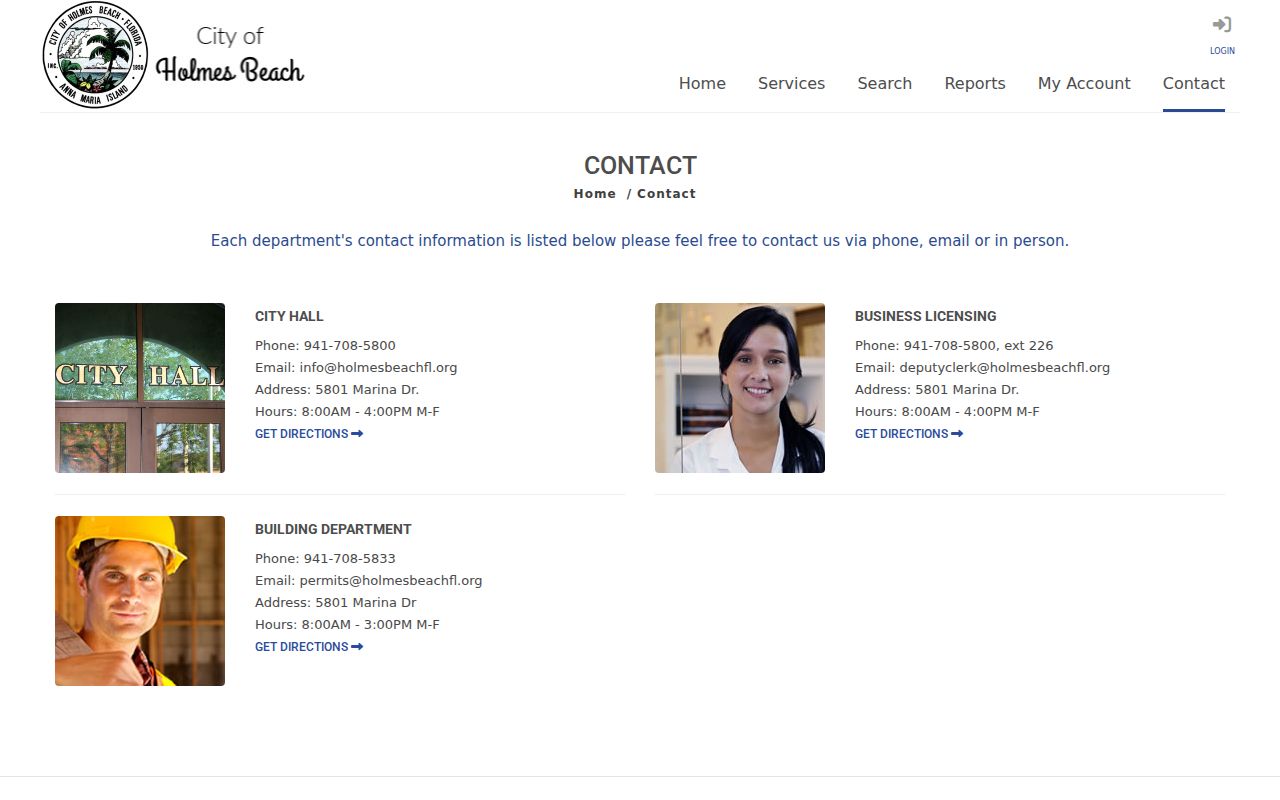
Use local police for suspected noncompliance in that city and FDLE or NSOPW for the public registry search itself.
Community Notification and Lawful Use
Florida community notification for predators can reach schools and licensed child care within one mile. Notices may include name, photo, description, address, offense circumstances, and whether the victim was an adult or minor, but never the victim’s name. Residency law includes a 1,000-foot state rule in Florida Statutes §775.215 for specified convictions, and local rules may add complexity.
The registry supports safety planning and informed awareness. It is not an FDLE risk assessment. Do not infer present danger from a designation, status, address, or map point. Confirm identity carefully and report a factual concern through law enforcement.
Registry misuse can be a crime: Florida Statutes §775.21 provides criminal penalties for extortion, knowing false publication, or material alteration of registry information. Do not harass, threaten, intimidate, or target a registrant or household.
FDLE data is partner-reported and can change fast. Positive identification requires fingerprints. Those two cautions should guide every Manatee County registry result, especially before anyone acts on a name or address match.
Community awareness works best with restraint. Use address alerts, school or campus tools, and official local contacts to plan for safety. Do not republish altered data or add claims the profile does not make. When two profiles appear similar, compare aliases, birth information, physical marks, vehicles, and reported addresses, then leave definitive identity findings to fingerprint comparison.